Facebook Medium Reach Campaign Overview Follow
Introduction
Facebook marketing is one of the most effective means of driving traffic & conversions to your Zero Latency website. Whilst every individual site may have differences in their digital marketing landscape, this How-to guide will serve as a general waypoint on how sites should segment their clients digitally and create campaigns specifically to target those groups. In order to maximize the benefit from this guide, please read the guide on Broad reach campaigns first.
Step 1: Identifying Marketing Objective
Step 2: Defining Audience, Placements & Scheduling Ads
Step 3: Creating, naming and ad artwork placement.
Overview
Medium Reach campaigns are campaigns generally aimed at the middle of your marketing funnel. How a site can categorize a target audience in this segment as a rule of thumb would be that
- Your audience has come across Zero Latency once or twice, so they are vaguely aware of your presence from the top of the funnel.
- Your audience may have played at a Zero Latency site once. Your audience may have engaged in a previous post. Whether it is liking, watching a video, liking your page.
At this stage of the funnel, your audience is aware of you but may have not yet made a booking or a final jump to purchase your experience. So campaigns around the middle funnel should take consideration this audience type. While also catering to audiences that might have purchased, but have otherwise forgotten your brand. Often times these campaigns are more targeted and intelligent, with the campaigns in this category ranging from increased engagement, lead generation to low conversion campaigns.
The considerations in this part often range from the business need at this point of time, however it is always recommended to have all 3 campaigns to be running simultaneously to maximize your audience reach. A new business may want to have a larger spend on their Broad reach campaigns at the start of the business, and invest less money into their medium reach or re-target campaigns. This however can change at any point of time at an individual site cycle.
This How-to guide specifically will explain a Medium reach engagement campaign on Facebook.
Step 1 - Identifying Marketing Objective for your Mid funnel and creating campaigns for it
For the purpose of this how-to guide, we will take Melbourne’s business need. Melbourne wants to increase their mid-funnel engagement by having more people interact, like, follow, engage and re-share, and specifically promote the Sol Raider’s game. The marketing campaign is to have a Facebook & Instagram competition to promote likes, shares, engagement and content.
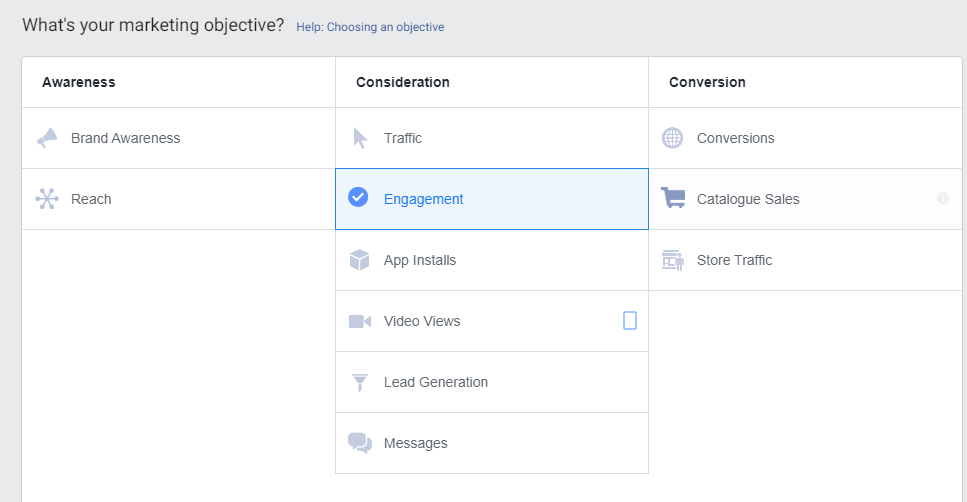
Engagement is chosen as the consideration for this campaign
Once the desired campaign outcome has been chosen, we then go to the budgeting, ad spend and scheduling of the campaign.
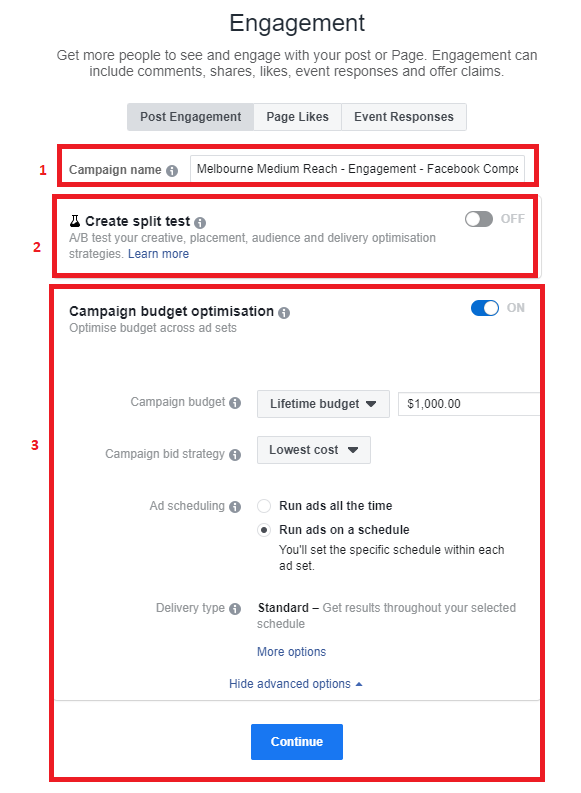
- Campaign name follows the best practice naming convention. Categorizing the campaign as “Medium Reach - Engagement - Facebook Competition”
- A split test is not needed, as there is no variable that needs to be tested.
- Campaign budget optimisation is turned on, with the lifetime budget set at $1000.00. Campaign bid strategy is set as the lowest.
Ads are selected to run on a schedule based on Melbourne’s metrics of highest time slot engagement on Facebook.
Step 2 - Defining Audience, Placements & Scheduling Ads
Following the setup, we now go into the Ad set section to define our audience, placements & schedule.
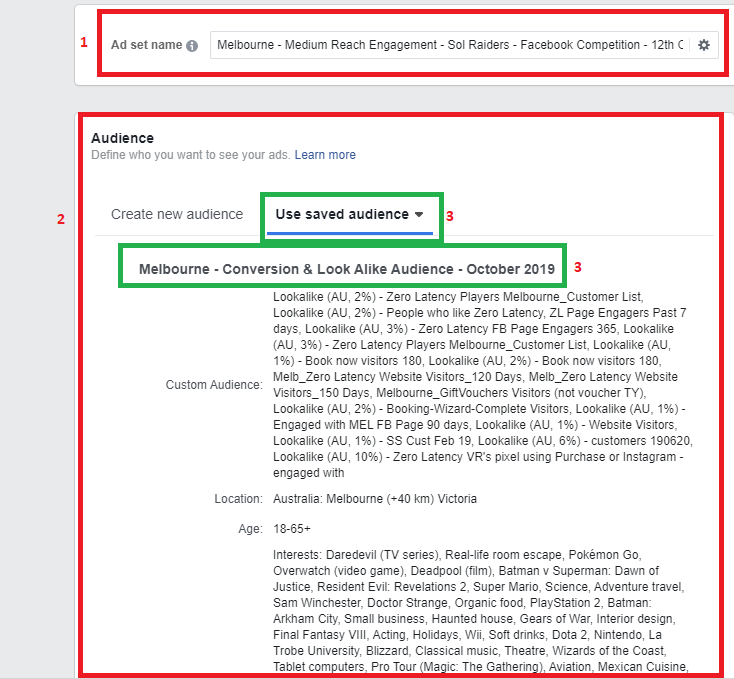
Please Note
Every site’s data will differ, and sites should not use this as a measurement of success for your own site.
- The ad set is named with best practice for ease of tracking, keeping the messaging consistent and clearly stating the intention of the campaign.
- The Audience is set and placed in.
- Referring back to the Broad Reach Campaign, Saved audiences with similar characteristics can be reused as the audience was clearly defined when an older campaign was made.
For this campaign, with engagement in mind, the target audience that was considered would be people of competitive nature, likely to engage with our campaign, previously engaged patrons, fans and interests of sci-fi, first-person shooters & robots. As well as associated companies that would relate to those items in the video games, movies and lifestyle scene were used as tags and SEO.
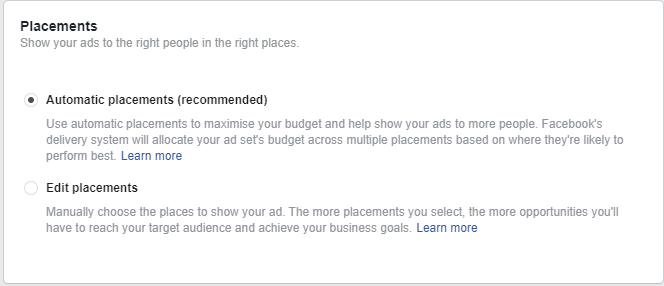
Placements are set as automatic as per Facebook's recommendation.
Please Note
Every site’s data will differ, and sites should not use this as a measurement of success for your own site.
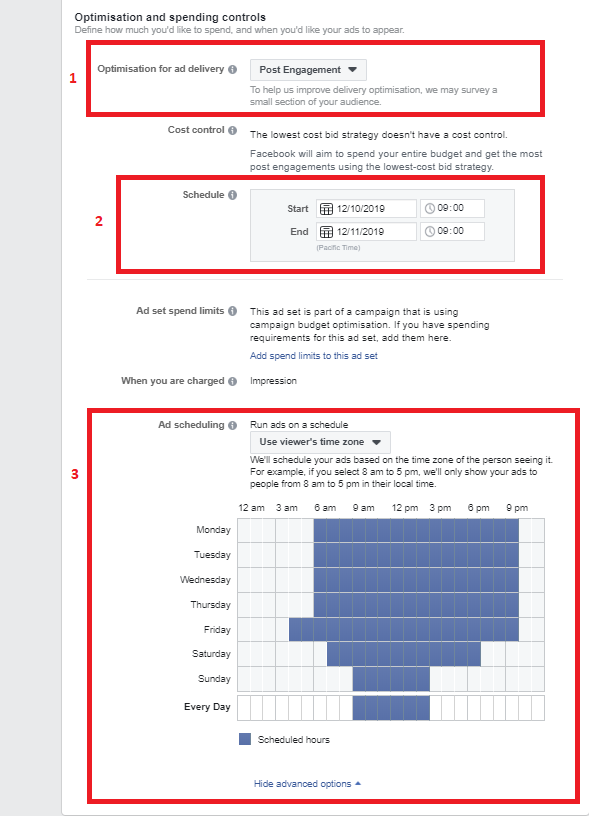
- Optimisation for ad delivery is set as post engagement, as per the campaign objective
- Schedule to show that the campaign to start on the 12th to the 12th of November, as the intention is for the competition to run for 1 month.
- Ad schedule is as per Melbourne’s internal data of engagement rate on Facebook.
Step 3 - Creating, naming and ad artwork placement.
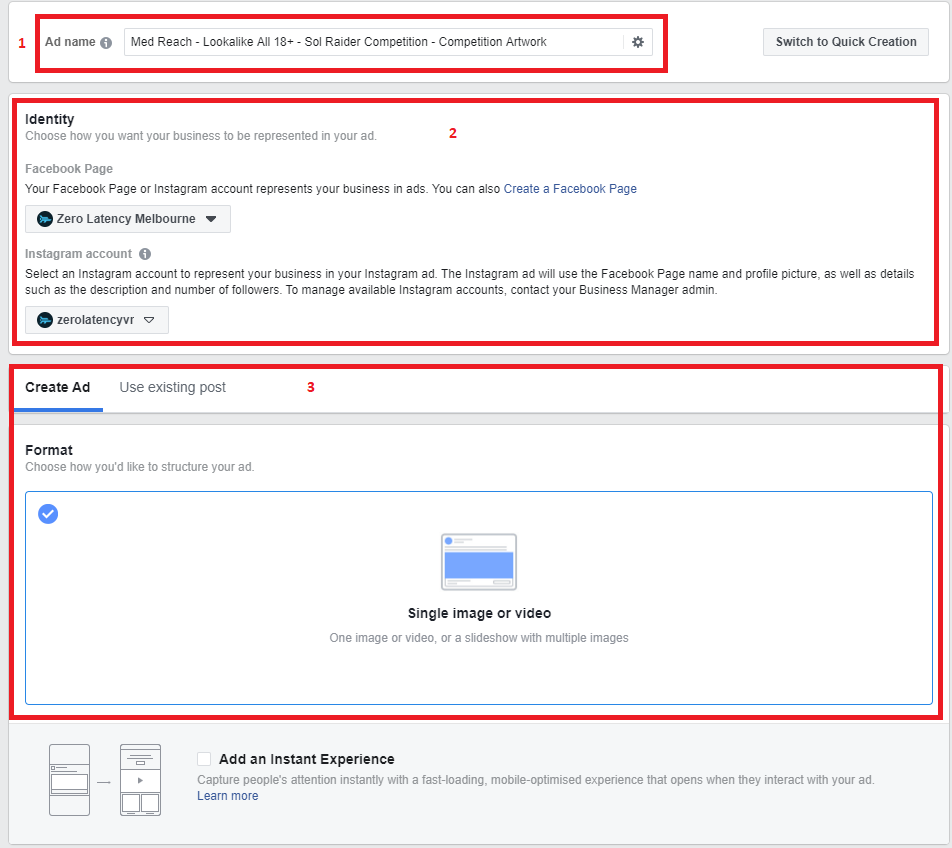
- Ad name is as per best practices naming guide.
- Identity is set as the site Facebook and Instagram account
- The format is as per dictated by Facebook.
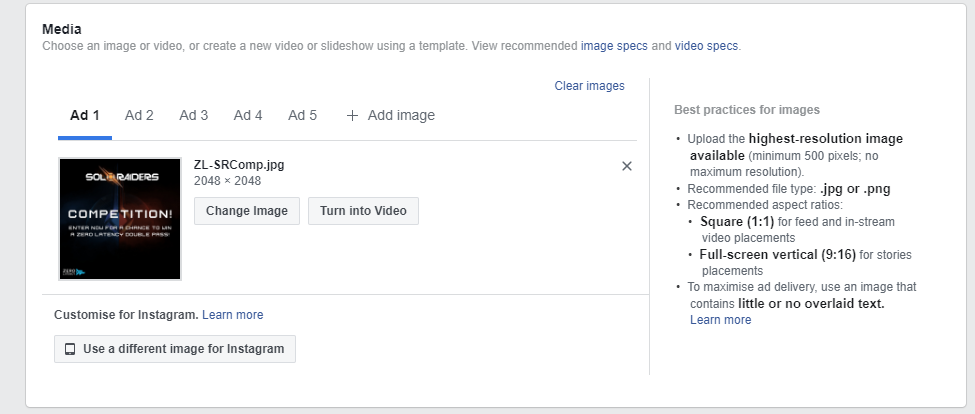
Ad artwork is uploaded
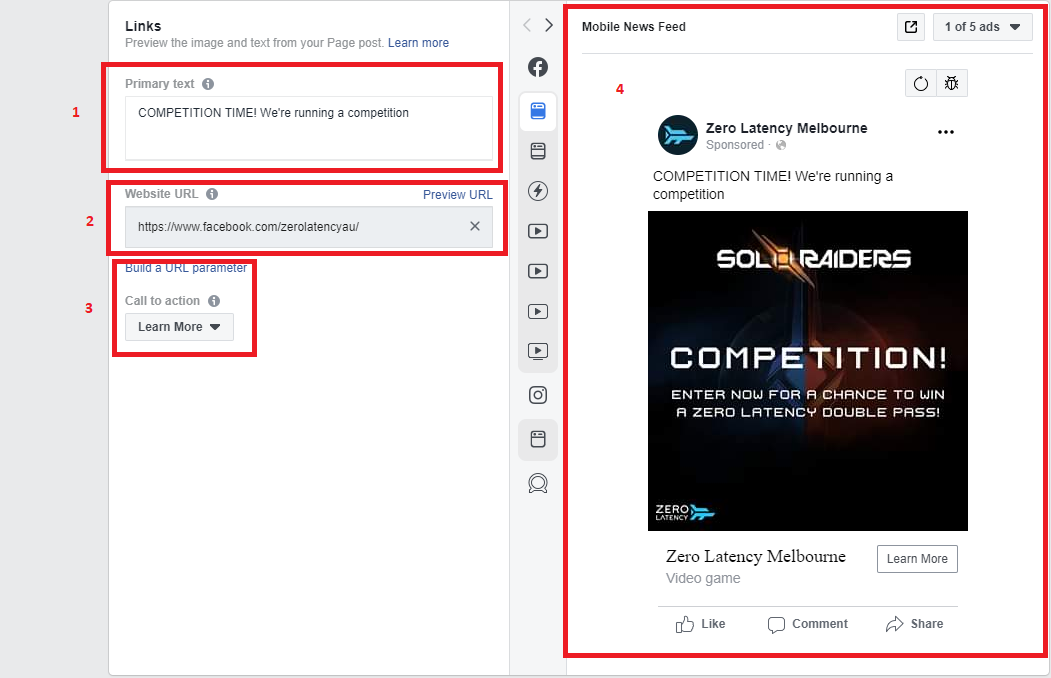
- Primary text with the intention to have people engage with the ad. The competition takes precedent as we want to lead people to our Facebook page where the competition details are placed down.
- Website URL is linking back to our Melbourne Facebook page
- Call to action is [Learn More] so people who are interested in the offer will want to learn more.
- A photo posted is clean, clean and succinct
Step 4 - Facebook Tracking
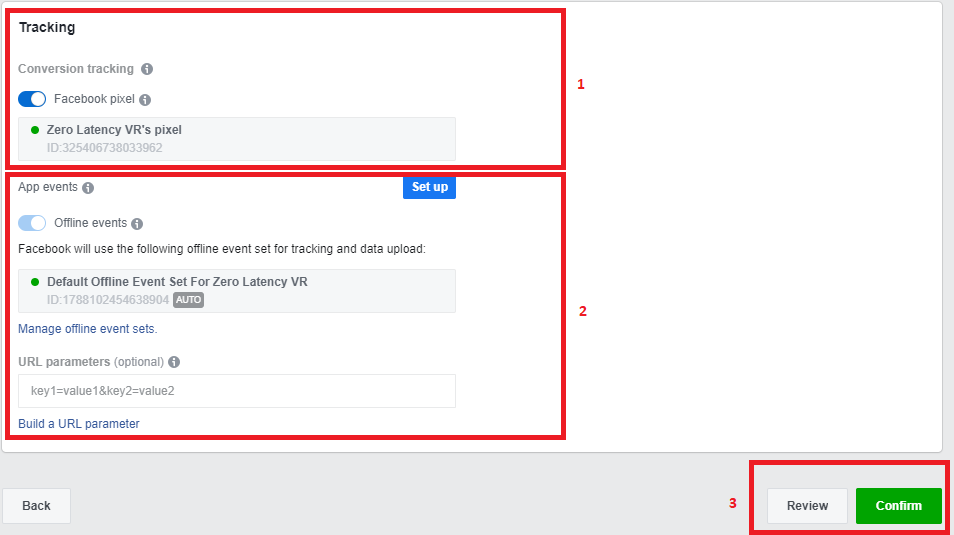
- Facebook pixel tracking is turned on, as per best practices
- Offline events are turned off. As this campaign does not affect any on-site activation
- Review and ready to go live!
Conclusion
Understanding the metrics, who you are targeting, and the specific campaign type is important to be able to tailor your Facebook campaigns. Campaign ideas can change or re-phrased depending on the need of the business.
Best of luck with your site campaigns!
Article Keywords/Phrases:

How do I make a medium reach campaign?
Facebook campaign
Comments
0 comments
Article is closed for comments.